
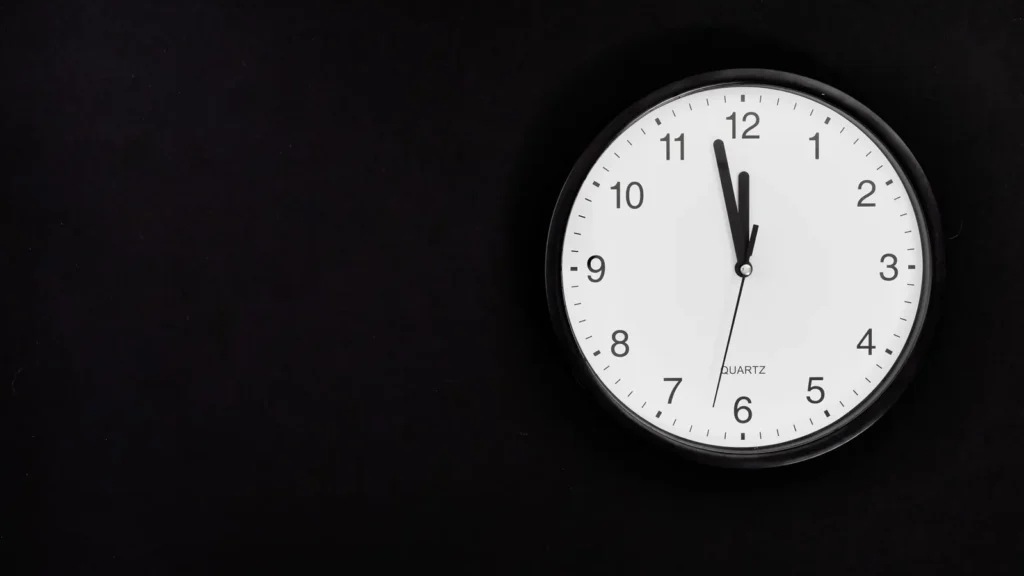
The Doomsday Clock stands at 85 seconds to midnight, the closest it has been since it was created in 1947. The Doomsday Clock is a symbol set once a year by the Bulletin of the Atomic Scientists to show how near they believe humanity is to wrecking itself with its own technology. Midnight stands for global catastrophe. The latest setting was announced on 27 January 2026.
It’s one of the best-known warnings in the world, and one of the most misread. People often treat it as a countdown or a forecast. It’s neither, and knowing what it measures makes the number far more useful.
What is the Doomsday Clock?
Think of it as a public verdict from a panel of experts. The closer the hands sit to midnight, the more danger they see from human-made threats. The clock doesn’t tick. Its time changes only when the board decides to move it, which usually happens once a year in late January.
Who created the Doomsday Clock?
The Bulletin of the Atomic Scientists was founded in 1945 by scientists who had worked on the Manhattan Project, the wartime programme that built the first atomic bombs. Many of them were alarmed by what they had helped make, and they started the Bulletin to warn the public.
The clock first appeared on the cover of the Bulletin’s magazine in June 1947. The artist Martyl Langsdorf, whose husband was a Manhattan Project physicist, designed it. She set the hands at seven minutes to midnight because, as she later put it, that looked right to her eye.
Who sets the Doomsday Clock now?
The Bulletin’s Science and Security Board decides the time. Its members work on nuclear weapons, climate science, biosecurity and new technologies. Before each announcement they consult the Board of Sponsors, a group that includes several Nobel laureates.
The board weighs four areas:
- Nuclear weapons: the size of arsenals, arms control treaties, and the chance of use in active wars.
- Climate change: emissions, warming and how the world is responding.
- Biological threats: pandemics, biological weapons and risky lab research.
- Disruptive technologies: artificial intelligence, cyber attacks and space weapons, the kind of risk that pioneers like Geoffrey Hinton now warn about.
Climate change was formally added in 2007. Before that, the clock was mostly about nuclear war.
Doomsday Clock history: every major setting
These are the settings that mark the big turning points since 1947.
| Year | Setting | What drove it |
|---|---|---|
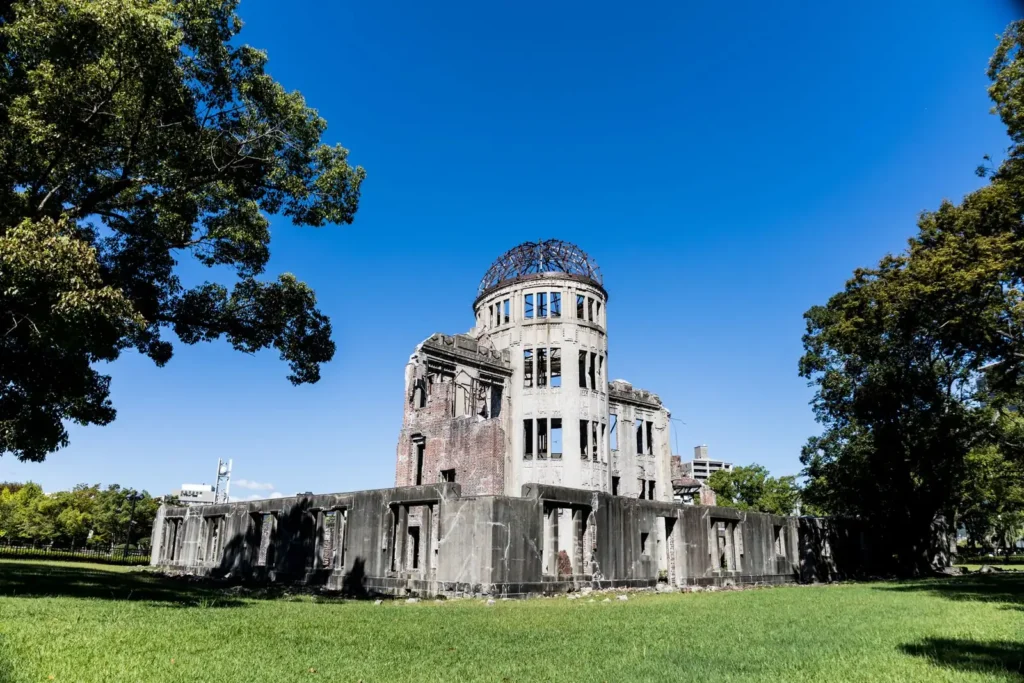
| 1947 | 7 minutes | The clock is created after the atomic bombings of Hiroshima and Nagasaki |
| 1949 | 3 minutes | The Soviet Union tests its first atomic bomb |
| 1953 | 2 minutes | The US and USSR test hydrogen bombs |
| 1963 | 12 minutes | The Partial Test Ban Treaty is signed |
| 1984 | 3 minutes | Cold War tensions peak |
| 1991 | 17 minutes | The Cold War ends and START is signed, the furthest from midnight ever |
| 2007 | 5 minutes | Climate change is added; North Korea tests a nuclear weapon |
| 2015 | 3 minutes | Weak progress on climate and nuclear modernisation |
| 2018 | 2 minutes | Nuclear threats and climate inaction |
| 2020 | 100 seconds | The clock switches to seconds for the first time |
| 2023 | 90 seconds | The war in Ukraine and nuclear threats |
| 2025 | 89 seconds | Continued nuclear, climate and AI risks |
| 2026 | 85 seconds | The closest to midnight in the clock’s history |
Why did the Doomsday Clock move to 85 seconds in 2026?
The board said the world had slipped closer to catastrophe on several fronts at once. Its 2026 statement named nuclear weapons, climate change and biological threats as the main dangers, added the fast-growing risks of artificial intelligence, and blamed a failure of leadership and a breakdown in international cooperation.
It asked for three things: limits on nuclear arsenals, international rules for AI, and new agreements on biological threats. Since that announcement, the Iran war that began in February 2026 has pushed tensions in the Middle East higher still.
Carl Sagan and nuclear winter
Nuclear war is still at the heart of the clock, partly because of an idea from the 1980s. In 1983 Carl Sagan and colleagues published the “TTAPS” study. It argued that a large nuclear war could throw so much smoke into the upper atmosphere that sunlight would be blocked for years, causing a “nuclear winter” and crop failures around the world.
Later research changed the numbers but kept the core finding. A 2022 study in Nature Food, led by Lili Xia and Alan Robock, estimated that a war between India and Pakistan could put more than 2 billion people at risk of starvation. A full war between the United States and Russia could put more than 5 billion at risk, mostly through famine far from the fighting.
Is the Doomsday Clock accurate?
It was never built to be accurate the way a thermometer is. It’s a judgement call, and it has sensible critics:
- It lumps very different risks together. A nuclear war could happen in an afternoon, while climate change plays out over decades. One number hides that difference.
- It rarely moves back. The hands have crept forward for years, so each new setting grabs less attention than the last.
- It isn’t a probability. 85 seconds doesn’t translate into any particular chance of disaster.
Supporters say that misses the purpose. The clock is meant to start conversations and to remind people that these dangers are made by humans and can be reduced by humans. If you want estimates you can compare, philosopher Toby Ord has put numbers on each risk for this century.
Can the Doomsday Clock be turned back?
Yes, and it has been. The biggest reversal came in 1991, when the Cold War ended and the US and Soviet Union agreed to cut their arsenals, pushing the hands out to 17 minutes. That’s the most hopeful part of its history. The Bulletin’s advice is aimed at governments, but ordinary people have a part too: following reliable sources, backing arms control and climate action, and pressing for sensible rules on technologies like AI.
Frequently asked questions
What happens if the Doomsday Clock reaches midnight?
Nothing happens automatically. Midnight is a symbol. If the board ever set the clock to midnight, it would mean they believed a global catastrophe was under way or certain.
When is the next Doomsday Clock announcement?
The Bulletin normally announces the new time in late January, so the next update is expected in January 2027.
Why is the Doomsday Clock measured in seconds now?
Since 2020 the hands have been less than two minutes from midnight, so the Bulletin switched to seconds to show smaller changes.
Sources and further reading
- Bulletin of the Atomic Scientists: Doomsday Clock
- Bulletin of the Atomic Scientists: Timeline of past statements
- Xia et al. (2022), Global food insecurity and famine from nuclear war soot injection, Nature Food
- Federation of American Scientists: Status of world nuclear forces
Related articles
New here? Start with all predictions about the end of the world.
We explain what the Bulletin and other experts have said in our own words and link to the originals so you can check them. If something here is wrong or out of date, let us know.