
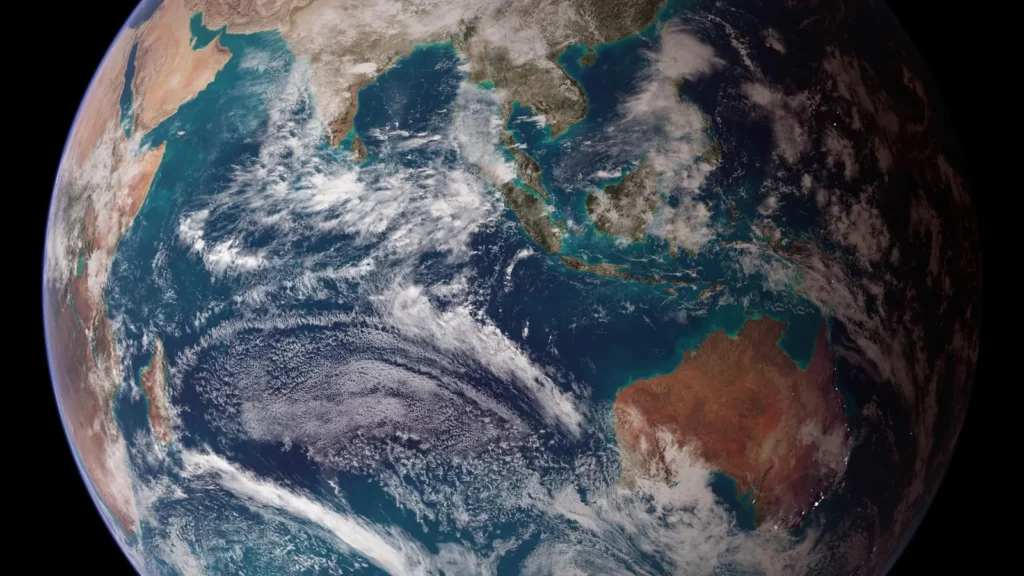
Nobody can say the end of time has started, but it’s easy to see why so many people are asking. Since 1990 the world has changed faster than at any time in history, and 2026 has brought open war in the Middle East, record AI-related job cuts and technology that can bring the dead back on stage. Scientists, philosophers and religious scholars are all taking the question seriously, in very different ways.
Where we are in time
It is 2026. To understand how small our moment is, start at the beginning:
| What | How long ago |
|---|---|
| The universe began (Big Bang) | about 13.8 billion years |
| Earth formed | about 4.54 billion years |
| First life on Earth | at least 3.5 billion years |
| Dinosaurs wiped out by an asteroid | 66 million years |
| Modern humans appear | about 300,000 years |
| Farming and the first villages | about 10,000 years |
| Humans first walk on the Moon | 1969 |
| The internet reaches the public | early 1990s |
| Now | 2026 |
If Earth’s whole history were squeezed into one year, modern humans would appear only in the last 35 minutes or so of 31 December. Everything in this article, from the internet to AI, would fit into the final fraction of a second.
Why scientists and philosophers are asking if the end is near
This is no longer only a religious question. In January 2026, the scientists behind the Doomsday Clock set it to 85 seconds to midnight, the closest it has ever been. Oxford philosopher Toby Ord puts the chance of an existential catastrophe this century at about 1 in 6. AI pioneer Geoffrey Hinton, a 2024 Nobel Prize winner, has warned of a 10–20% chance that AI leads to human extinction within 30 years.
None of them gives a date. What they share is a feeling that humanity has gained enormous power faster than it has gained wisdom.
300 years in brief: from the Mughals to the world wars
To understand why 2026 feels so dangerous, it helps to look at how quickly power has changed hands.
1700s: the fall of the Mughal Empire
In 1700 the Mughal Empire ruled most of the Indian subcontinent and was one of the richest states on Earth. After Emperor Aurangzeb died in 1707, it broke apart quickly. Provincial governors became independent, and in 1739 the Persian ruler Nader Shah sacked Delhi and carried off the Peacock Throne.
1757–1947: almost 200 years of British power
Into that gap stepped the British East India Company, a trading company from London with its own private army. At the Battle of Plassey in 1757 it defeated Nawab Siraj-ud-Daulah of Bengal, and over the next century it took control of most of the subcontinent. After the uprising of 1857, which Pakistanis and Indians remember as the War of Independence, the British Crown took direct rule. British power lasted about 190 years, until independence and Partition in 1947. Partition itself displaced around 15 million people and killed hundreds of thousands, possibly more than a million.
1914–1945: two world wars
In the 20th century, war became industrial. The First World War (1914–1918) killed around 15 to 20 million people. The Second World War (1939–1945) was the deadliest conflict in history, killing an estimated 70 to 85 million people, about 3% of everyone alive at the time, including 6 million Jews murdered in the Holocaust. It ended in August 1945 when the United States dropped atomic bombs on Hiroshima and Nagasaki. For the first time, humans had a weapon that could destroy civilisation.
1945–1990: the bomb, the Cold War and new nations
After 1945 the United Nations was founded, and dozens of new countries won independence, including Pakistan and India in 1947. In 1948 the State of Israel was declared and around 700,000 Palestinians fled or were driven from their homes, an event Palestinians call the Nakba; the conflict over that land continues in Gaza today. Meanwhile the United States and the Soviet Union built tens of thousands of nuclear weapons and came close to war several times, most famously in the Cuban Missile Crisis of 1962.
Since 1990: the fastest change in human history
Think about how much has happened in one lifetime:
- 1991: the Soviet Union collapses and the Cold War ends. The Doomsday Clock moves to 17 minutes to midnight, its safest point ever.
- 1990s: the World Wide Web and mobile phones spread around the world.
- 2001: the September 11 attacks, followed by wars in Afghanistan (2001) and Iraq (2003).
- 2007–2008: the smartphone arrives, and the global financial crisis hits.
- 2010s: social media reshapes politics, news and family life.
- 2020: COVID-19. The World Health Organization has recorded more than 7 million deaths.
- 2022: Russia launches its full-scale invasion of Ukraine, and ChatGPT brings AI to the public.
- 2023–2026: war in Gaza, then war with Iran, and AI begins replacing jobs at scale.
For most of history, a grandparent and a grandchild lived in roughly the same world. Today, the world a child is born into can look very different by the time they finish school.
The wars of the 2020s: has World War 3 already begun?
Gaza (since 7 October 2023)
The war began on 7 October 2023, when Hamas launched attacks on Israel from Gaza, and Israel responded with a military campaign in the Strip. That was three years ago. A US-backed ceasefire took effect on 10 October 2025, but strikes have continued. One year on, more than 100 humanitarian and human rights groups said the ceasefire exists “in name only”. Gaza’s Health Ministry puts the total death toll since October 2023 at more than 74,000.
Iran (2025, and again since 28 February 2026)
In June 2025, Israel and Iran fought what became known as the Twelve-Day War. Then, on 28 February 2026, the United States and Israel launched strikes on Iran, and Iran retaliated with missiles and drones against US bases and Gulf states. As of mid-October 2026 the war is more than seven months old. A ceasefire between the US and Iran is holding with no fixed end date, but Iran-backed Houthi forces in Yemen are still firing missiles at Saudi Arabia, shipping in the Strait of Hormuz has been hit, and Pakistan has pledged military backing for Saudi Arabia under their defence pact.
So is this World War 3?
Many people online say it already is. Most analysts disagree, for now. A world war usually means the great powers fighting each other directly. Today’s wars are regional, even though the United States is directly involved and Russia and China have been reported to support Iran. Back in 2014, Pope Francis described the world’s many conflicts as a “third world war fought piecemeal”, and that phrase is often repeated today because it captures how connected these wars feel. We look at the risks for next year in Will World War 3 happen in 2027?
2026: machines are taking over the work
Robots in the factories
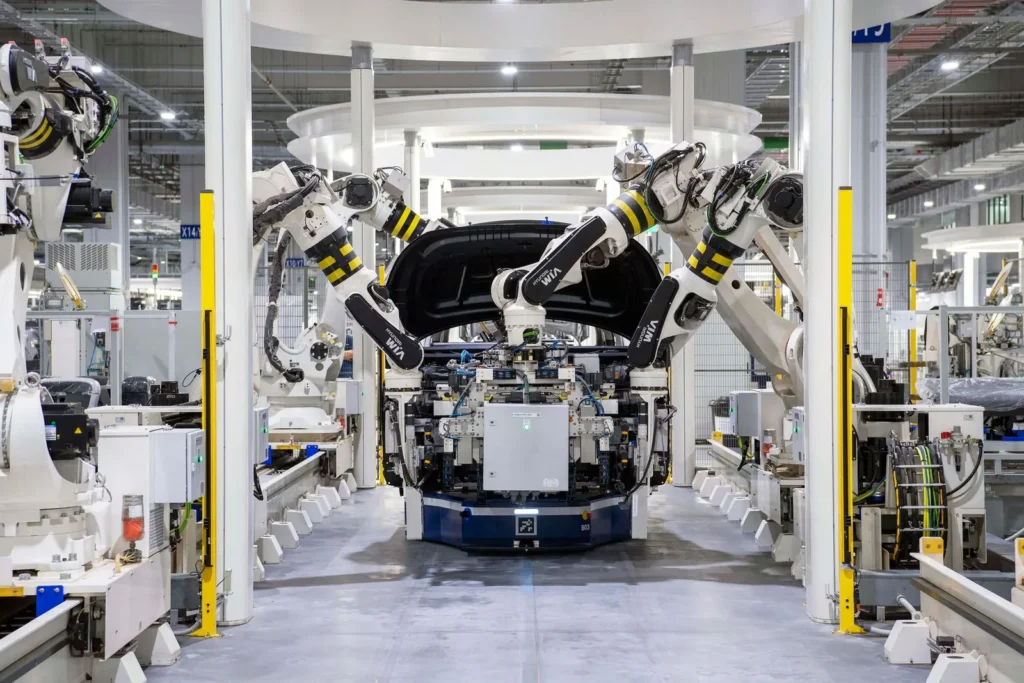
Robots now build much of what we buy. According to the International Federation of Robotics, about 5 million industrial robots were working in factories around the world in 2025, more than double the number seven years earlier. More than 600,000 new robots were installed in that year alone, almost 60% of them in China.
Drones in the wars
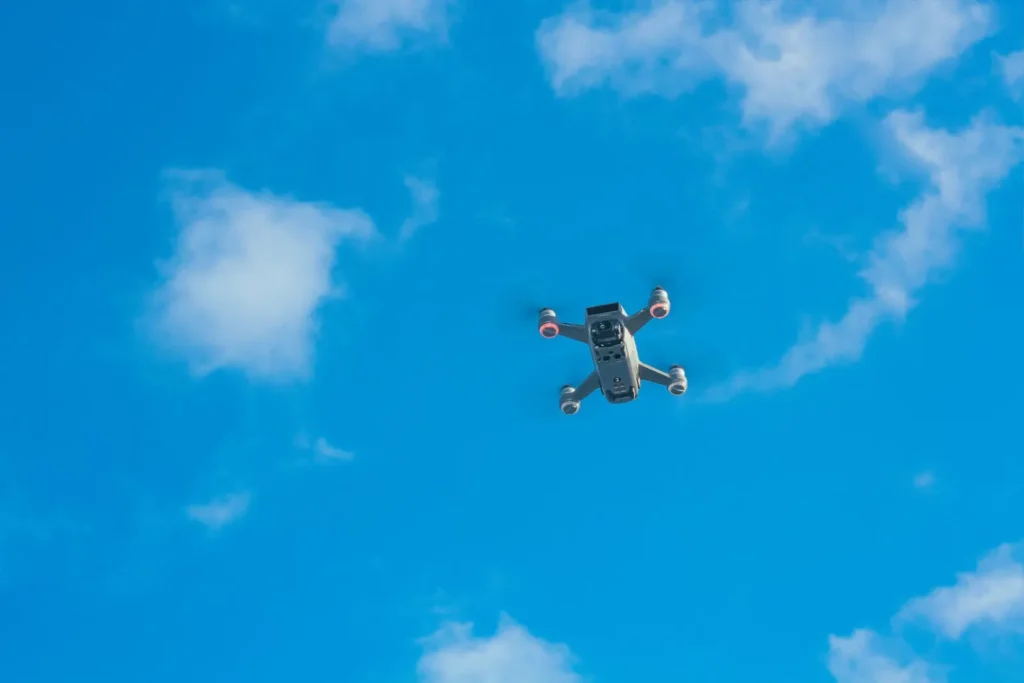
War has changed just as fast. In Ukraine, cheap drones now cause a large share of battlefield casualties, and in the 2026 Iran war, waves of missiles and drones have been fired at cities, bases and oil facilities across the Gulf. A weapon that once needed a pilot and a fighter jet can now be a flying machine that costs a few hundred dollars.
AI and jobs
AI is also changing work. In the United States, employers cited AI as the reason for more than 120,000 announced job cuts in the first nine months of 2026, about one in five of all cuts and more than any other reason, according to the outplacement firm Challenger, Gray & Christmas. That is already more than double the total for all of 2025.
There is another side. Total layoffs in the US fell in 2026, and some companies found that replacing people with AI caused costly mistakes. Economists still debate how much AI is destroying jobs and how much it is being blamed for cuts made for other reasons. But for workers in customer service, data entry and junior software roles, the change is already real.
When the dead perform on stage

On 9 October 2026, the late Punjabi singer Sidhu Moose Wala, who was shot dead in 2022, “performed” in front of thousands of fans at Toronto’s Scotiabank Arena, as a 3D hologram synced with his original vocals. Some fans paid hundreds of dollars a ticket. It was the start of a world tour, and reporters noted that AI is helping make these hologram shows look more real.
For many people, seeing a dead man perform was moving. For others, it was unsettling. And it is only one example. AI can now copy a person’s voice and face, write essays, generate videos of events that never happened and hold conversations that feel human.
Half the world in survival mode
While technology races ahead, much of the world is struggling just to get by:
- Debt: according to the UN’s trade and development agency (UNCTAD), about 3.4 billion people, nearly half of humanity, live in countries that spend more on interest payments on their debts than on health or education.
- Poverty: the World Bank estimates that around 831 million people live in extreme poverty, on less than $3 a day, and that about 1 in 5 children is growing up in extreme poverty.
- Places destroyed: in Gaza, UN satellite analysis found that about 82% of all structures had been damaged as of June 2026, and more than 134,000 were completely destroyed. Cities in Ukraine, Sudan and Syria have also been reduced to rubble in recent years.
For billions of people, the “end of the world” is not a theory. It is the loss of a home, a job or a country.
What experts predict for 2027
Nobody can predict war with certainty, but these are the dates and risks analysts are watching:
- Iran: President Trump has said the US will not resume strikes on Iran before the 3 November 2026 midterm elections, and reports say Iran is fortifying its nuclear sites in case fighting resumes. Whether the war restarts or ends with a deal is one of the biggest questions for 2027.
- Taiwan: for years, US military leaders warned that China’s president Xi Jinping wanted his army ready to take Taiwan by force by 2027. But the US intelligence community’s 2026 threat assessment said China does not currently plan to invade in 2027, and US officials now consider an invasion before 2028 increasingly unlikely.
- Gaza: the ceasefire is fragile, and rebuilding has barely started.
2027 could turn out worse or better. These are human decisions, not fixed events.
“Is this Dajjal’s technology?”
In Islamic tradition, the Dajjal is a great deceiver who will appear before the Day of Judgment and mislead people with tricks that look like miracles. When people see a dead singer brought back as a hologram, AI that can fake any face or voice, and surveillance that tracks everyone, many ask whether this is the kind of deception the hadith warned about. Some go further and claim that superpowers are deliberately preparing the way for the Dajjal.
So it helps to separate what is known from what is guessed. There is no evidence of any plan by governments to “prepare the Dajjal”. These are beliefs and interpretations shared online, not established facts. Many Islamic scholars also warn against linking specific inventions, countries or people to the Dajjal, because the hadith describe him as a person, and because guessing creates fear and confusion. What scholars agree on is the lesson behind the warning: do not believe everything you see, hold on to faith and truth, and do not be deceived by appearances. In an age of AI and deepfakes, that advice has never been more practical.
We reached the Moon. Can we manage ourselves?
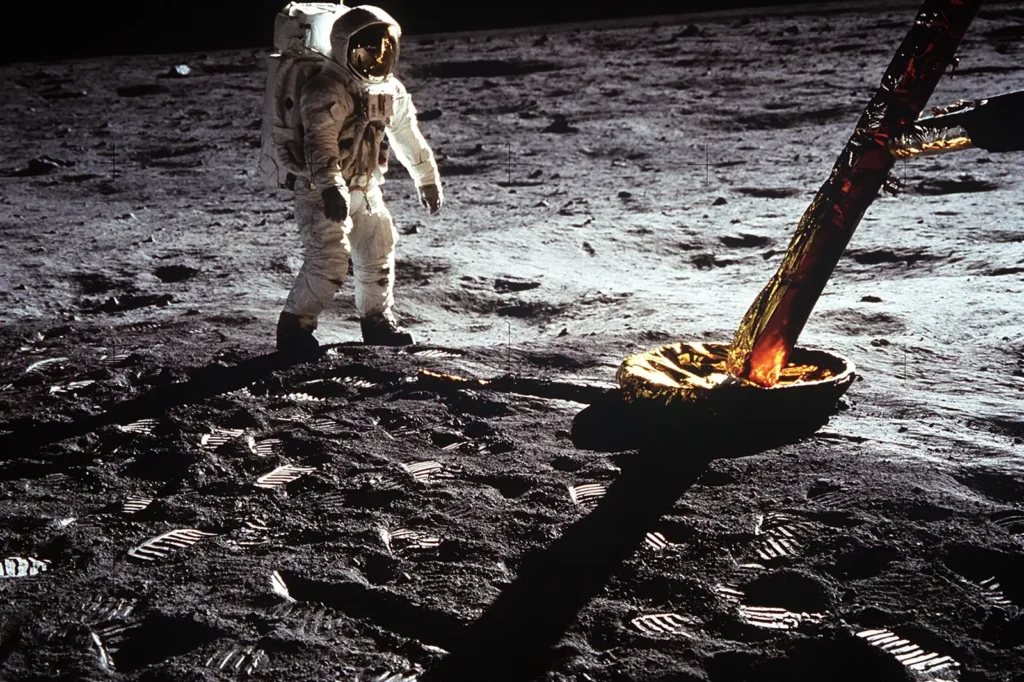
In 1969, humans walked on the Moon, using computers far weaker than a modern phone. Today we can edit genes, fill factories with robots, build AI systems that can write and reason, and send machines across the solar system. Our power keeps growing. The question that scientists, philosophers and religious scholars are all asking, in their own ways, is whether our wisdom is growing with it.
Is the world ready?
Looking at wars that do not end, technology that blurs what is real, and work that is changing under people’s feet, it is understandable that many feel the end of time has started. But a few things are worth remembering:
- Every generation has had people who were sure the end had arrived. Read 12 times the world was supposed to end.
- The biggest risks today are made by humans, which means humans can reduce them.
- Islam, Christianity and other traditions teach that only God knows the Hour. Science says the Earth itself has about a billion years of life left in it.
Whether the end is near or far, the question “is the world ready?” is a question about us: how we treat each other, how we use our power, and what we choose to protect.
Frequently asked questions
Has the end of the world started in 2026?
There is no evidence that the end of the world has started. 2026 has seen serious wars and fast technological change, which is why many people are asking the question. A viral claim that the world ends on 13 November 2026 comes from a 1960 population equation that stopped matching reality decades ago, as we explain in Will the world end on November 13, 2026?
Has World War 3 started?
Most analysts say no, because the great powers are not fighting each other directly. But the wars in Gaza, Iran, Yemen and Ukraine are connected, and some call the situation a “piecemeal” world war.
What will happen in 2027?
Analysts are watching whether the Iran war resumes after the US midterm elections, the fragile Gaza ceasefire, and tension over Taiwan. US intelligence does not currently expect a Chinese invasion of Taiwan in 2027.
Is AI the technology of the Dajjal?
This is a belief some people hold, not an established fact. Scholars generally caution against linking specific technologies to the Dajjal, while agreeing on the need to guard against deception.
Sources and further reading
- Bulletin of the Atomic Scientists: Doomsday Clock
- Nobel Prize in Physics 2024: Hopfield and Hinton
- International Federation of Robotics: World Robotics
- Challenger, Gray & Christmas: job cuts reports
- UNCTAD: A World of Debt
- World Bank: Poverty overview
- UNOSAT: satellite damage assessments
- US Office of the Director of National Intelligence: Annual threat assessments
- World Health Organization: COVID-19 deaths
Related articles
Or start from the beginning: all predictions about the end of the world.
We explain what experts and sources have said in our own words and link to the originals so you can check them. If something here is wrong or out of date, let us know.