
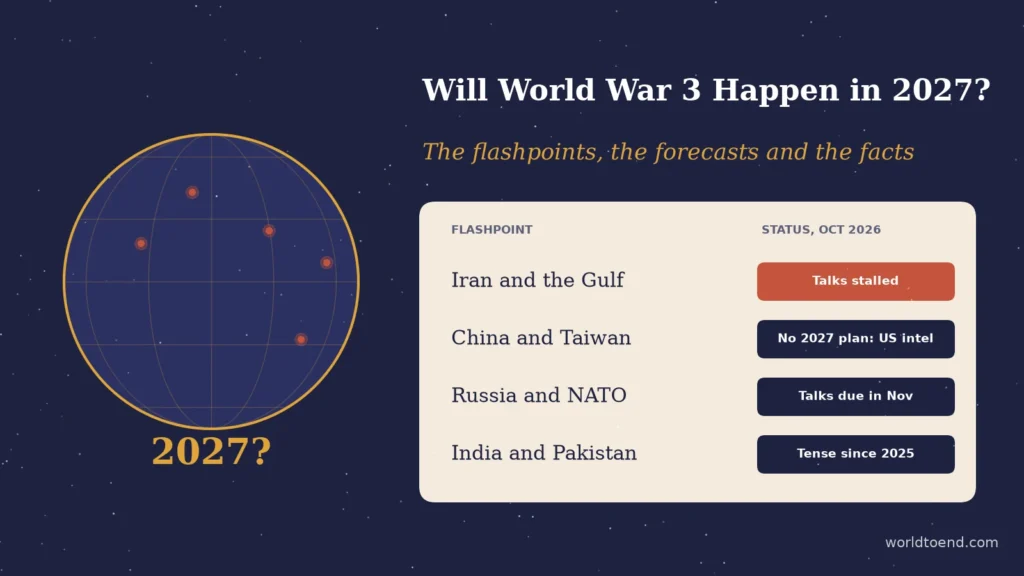
A third world war in 2027 is possible but unlikely. No intelligence agency, expert survey or forecasting platform predicts one, and the most-watched danger date, a Chinese invasion of Taiwan in 2027, was played down in March 2026 when US intelligence concluded that Beijing has no current plan to invade that year. The risk is real, though, and higher than it has been for decades: the war with Iran, the war in Ukraine and tension over Taiwan all involve nuclear-armed powers, and forecasters put the chance of a world war before 2050 at roughly one in five.
If you have been searching “will World War 3 happen” late at night, you are far from alone. This guide explains why 2027 keeps coming up, what actually counts as a world war, where the real flashpoints are as of October 2026, what the best forecasters say, and what the honest answer looks like.
Key takeaways
- No credible forecast points to a world war in 2027. The year matters mainly because of old warnings about Taiwan, which US intelligence has since softened.
- The main flashpoints are Iran and the Gulf, China and Taiwan, Russia and NATO, and India and Pakistan.
- On Metaculus, a leading forecasting platform, the community puts the chance of a “World War Three” before 2050 at around 20–25%.
- Nuclear deterrence, economic ties and the sheer cost of great-power war remain powerful brakes.
- Prophecies about World War 3 in 2027, from Baba Vanga to Nostradamus, have no evidence behind them.
Will World War 3 happen in 2027?
Almost certainly not, based on everything we know in October 2026. A world war would mean the great powers, the United States, China and Russia, and their allies fighting each other directly. None of them is doing that today, and none of the serious assessments published this year expects it in 2027.
That is not the same as saying the world is safe. In January 2026, the scientists behind the Doomsday Clock moved it to 85 seconds to midnight, the closest it has ever been, citing nuclear weapons, war and a breakdown in international cooperation. The danger is not a fixed date but a slow build-up of risks, any of which could escalate through miscalculation.
Why do people think World War 3 will start in 2027?
The year 2027 did not come from nowhere. It has three main sources.
The Taiwan “2027” warning
In March 2021, Admiral Philip Davidson, then head of US forces in the Indo-Pacific, told the US Senate that China could try to take Taiwan within the next six years, that is, by 2027. Analysts called it the “Davidson window”. Two years later, CIA Director William Burns said Chinese leader Xi Jinping had instructed his military to be ready to invade Taiwan by 2027, while stressing that this did not mean Xi had decided to do it. 2027 is also the 100th anniversary of China’s People’s Liberation Army, founded in 1927.
That date then took on a life of its own. But in its 2026 Annual Threat Assessment, published in March 2026, the US intelligence community said Chinese leaders do not currently plan to invade Taiwan in 2027 and have no fixed timeline for unification, while still keeping the option of force.
Viral prophecies and “AI predictions”
Every year brings lists of predictions attributed to Baba Vanga and Nostradamus, and both have been linked to a third world war. In October 2026, a widely shared story claimed that an AI chatbot had “predicted” when World War 3 would break out. A chatbot’s guess is not a forecast. We check the prophecies in Baba Vanga predictions 2027 and Nostradamus predictions 2027.
A year of real wars
Most of all, 2026 has felt dangerous. The United States and Israel went to war with Iran in February, the war in Ukraine continues, and Gaza remains in crisis. We cover the year’s events in Is the end of time starting? The world in 2026.
What counts as World War 3?
There is no official definition, which is one reason the question is so confusing. Most experts mean a war in which several great powers fight each other directly, across more than one region, at enormous cost.
Forecasters have to be precise. The Metaculus question “Will there be a World War Three before 2050?” only counts a war that involves countries making up at least 30% of the world’s economy or 50% of its population, and that kills at least 10 million people. By that standard, none of today’s wars qualifies, however terrible they are.
Has World War 3 already started?
Many people online say it has. Most analysts disagree, because the great powers are not fighting each other directly. But the world’s wars are more connected than they look. Back in 2014, Pope Francis described the many conflicts of the time as a “third world war fought piecemeal”, and the phrase is repeated often today.
According to the Council on Foreign Relations, the number of armed conflicts in the world is at its highest since the Second World War. In its 2026 survey of foreign policy experts, 28 of the 30 conflict scenarios it tracks were judged at least 50% likely to occur or worsen within a year.
The flashpoints to watch in 2027
| Flashpoint | Who is involved | Status in October 2026 | What could escalate it |
|---|---|---|---|
| Iran and the Gulf | Iran, the US, Israel, Gulf states | War since February 2026; talks through mediators have stalled | US strikes resuming after the midterm elections; attacks on shipping in the Strait of Hormuz |
| China and Taiwan | China, Taiwan, the US, Japan | US intelligence sees no 2027 invasion plan | A blockade, an accident at sea, or a political crisis in Taiwan |
| Russia and NATO | Russia, Ukraine, NATO members | War continues; new talks expected in November | An attack, even an accidental one, on a NATO member |
| India and Pakistan | Two nuclear-armed neighbours | Tense since their brief conflict in May 2025 | A major terror attack and retaliation |
Iran and the Gulf
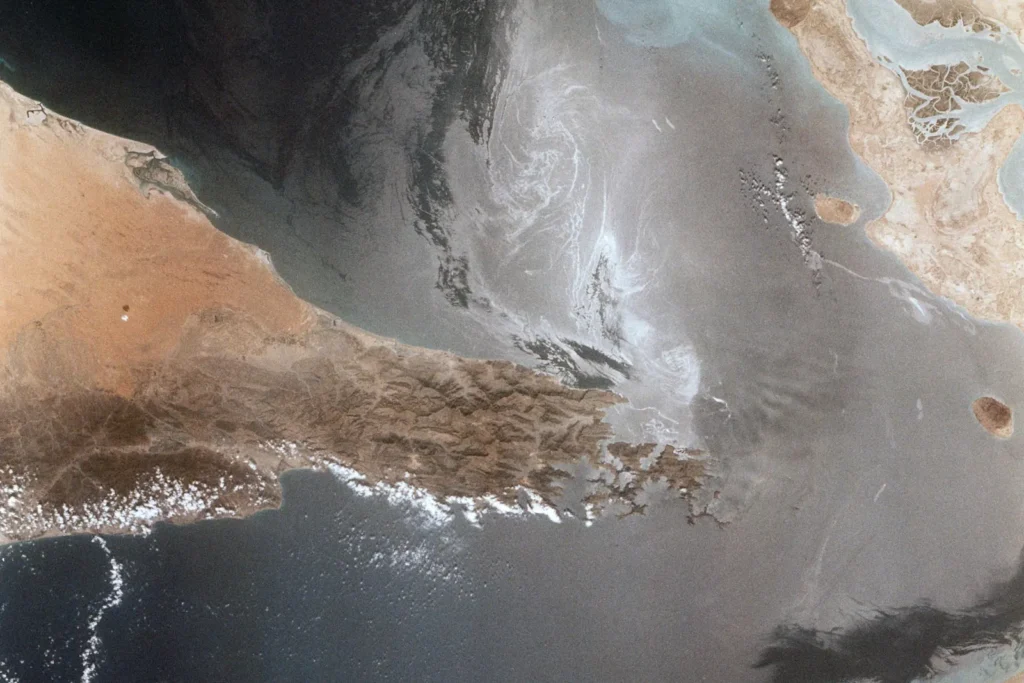
The war that began on 28 February 2026, when the United States and Israel struck Iran, is the most dangerous conflict involving a nuclear-armed power right now. As of late October, indirect talks through mediators, including Pakistan and Qatar, had stalled. Iran called the latest US proposal “insufficient”, and President Trump has said US military action could resume after the US midterm elections on 3 November if no deal is reached. Attacks on shipping in and around the Strait of Hormuz, through which a large share of the world’s oil passes, remain a constant risk.
For Pakistani readers, the conflict is close to home. Pakistan has been one of the mediators, and it signed a mutual defence agreement with Saudi Arabia in September 2025, which ties it more closely to the security of the Gulf.
Iran on its own cannot start a world war. The danger would be escalation that pulls in other major powers, which is why diplomats on all sides are working to keep the conflict contained.
China and Taiwan
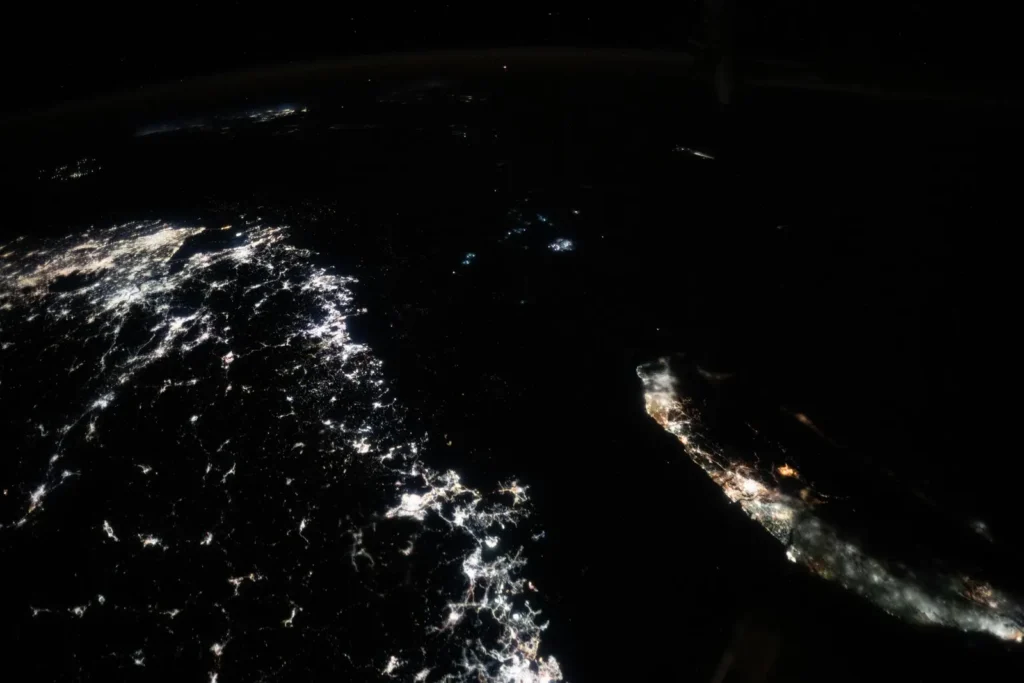
Taiwan is the scenario most likely to bring the United States and China, the world’s two largest economies, into direct conflict. China regards Taiwan as part of its territory. The United States does not formally recognise Taiwan as a country but supplies it with weapons and has signalled it could intervene.
The good news for 2027 is the US intelligence assessment that China has no current plan to invade that year, and that Chinese officials see an amphibious invasion as extremely difficult and risky. The bad news is that the Chinese military keeps training for it, and that a blockade or an incident at sea could create a crisis without a full invasion. The Council on Foreign Relations rated a cross-strait crisis as one of the most likely high-impact scenarios for 2026.
Russia and NATO
The war in Ukraine is now well into its fifth year. As of late October 2026, both Moscow and Kyiv had signalled they were ready for new talks in November, but fighting continued, and an “energy ceasefire” announced in October had failed. Russia still demands that Ukraine give up territory and drop its bid to join NATO.
The world-war risk lies in a direct clash between Russia and NATO. Under Article 5 of the NATO treaty, an attack on one member is treated as an attack on all, although each member decides for itself how to respond. Drones and missiles straying into NATO territory are the kind of accident that worries planners most.
India and Pakistan
In May 2025, India and Pakistan fought a brief conflict after a terrorist attack in Indian-administered Kashmir, before agreeing a ceasefire on 10 May. Both countries have nuclear weapons. A war between them would be a catastrophe for South Asia, but on its own it would not be a world war unless it drew in other great powers.
What do experts and forecasters actually say?
| Source | Estimate or finding |
|---|---|
| Metaculus forecasting community | Around 20–25% chance of a “World War Three” before 2050 |
| US intelligence, 2026 Annual Threat Assessment | China does not currently plan to invade Taiwan in 2027 |
| Council on Foreign Relations, 2026 survey | Conflicts at their highest since the Second World War; a Taiwan crisis and a wider Russia-Ukraine war among the top risks |
| Bulletin of the Atomic Scientists | Doomsday Clock at 85 seconds to midnight, the closest ever |
Notice what none of them says: none gives a date, and none expects a world war next year. A 20–25% chance over roughly 25 years works out to about 1% a year, small in any single year but large over a lifetime.
It is also worth being humble about forecasts. The Council on Foreign Relations survey published in December 2025 rated renewed war between Iran and Israel as only “moderately likely”. Within two months of the start of 2026, the region was at war. Experts are useful, but they are not prophets.
Why a world war is still unlikely
- Nuclear deterrence: since 1945, no two nuclear-armed great powers have fought a full war against each other. Leaders know that a nuclear exchange would destroy their own countries too, an idea known as mutually assured destruction.
- Economic ties: China, the United States and Europe trade enormous amounts with each other. A world war would wreck all of their economies at once.
- Alliances are not automatic: even NATO’s Article 5 leaves each country to decide how to respond. Wars do not spread by treaty alone.
- Constant contact: despite tensions, the major powers keep diplomatic and military hotlines open to prevent accidents from spiralling.
These brakes have held for 80 years. The risk is that they fail through miscalculation, an accident, or a leader who believes the other side will back down.
What would World War 3 look like?
It would not look like the 1940s. Experts expect a modern great-power war to involve:
- Cyberattacks on power grids, banks and communications, possibly before any shots are fired.
- Drones and missiles in huge numbers, as seen in Ukraine and in the Iran war.
- Attacks in space on satellites used for navigation, communications and early warning.
- Economic warfare: blockades, sanctions and disruption to shipping, food and energy supplies worldwide.
- The risk of nuclear use: the most dangerous moment would come if a losing side considered nuclear weapons.
Who would win World War 3?
Possibly no one. In a war between nuclear powers, the losses would be so great that “winning” may lose its meaning. A 2022 study in the journal Nature Food estimated that a full nuclear war between the United States and Russia could put more than 5 billion people at risk of famine, because smoke from burning cities would cool the planet and cause global crop failures. Even a regional nuclear war between India and Pakistan could put more than 2 billion people at risk.
Which countries would be safest in World War 3?
No country would be untouched, because trade, food and climate effects would spread worldwide. Lists of “safest countries” usually favour places that are remote, neutral and able to feed themselves, such as New Zealand, Iceland, Ireland and Switzerland. Iceland has also ranked as the world’s most peaceful country in the Global Peace Index for many years. The 2022 Nature Food study found that a few food-exporting countries in the Southern Hemisphere, including Australia and New Zealand, would be among the least affected by a nuclear winter.
Would there be a draft?
In the United States, the draft has not been used since 1973. Men aged 18 to 25 must still register with the Selective Service System, but bringing back conscription would require an act of Congress. The United Kingdom has had no conscription since the early 1960s, and Pakistan’s armed forces are made up of volunteers.
What do prophecies say about World War 3?
Searches for World War 3 predictions often lead to prophecy. Lists attributed to Baba Vanga have predicted world wars for 2010 and 2026, and neither came true. Nostradamus’s undated verses are linked to whichever war is in the news. In India, some followers of the Bhavishya Malika texts claim a great war will come before the end of the current age. And many religions describe great final battles, from Armageddon in the Book of Revelation to the battles before the Day of Judgment in Islamic tradition. We compare these traditions in Signs of the end across religions and science.
None of these sources gives evidence that can be checked, and the long history of failed end-of-the-world predictions is a good reason for caution.
What can you actually do?
- Follow reliable news, not viral clips. Prediction videos and AI “forecasts” are designed for clicks.
- Prepare for emergencies in general. A basic emergency kit with water, food, medicine and important documents is useful for floods, earthquakes and power cuts, not only war.
- Look after your mental health. Constant doom-scrolling increases anxiety without making anyone safer. It is reasonable to stay informed and still switch off.
- Remember that these risks are human-made. That means diplomacy, arms control and public pressure can reduce them. See the odds of human extinction this century for how experts think about it.
Frequently asked questions
Will World War 3 happen in 2027?
It is very unlikely. No intelligence agency or forecasting platform predicts a world war in 2027, and US intelligence said in March 2026 that China has no current plan to invade Taiwan that year.
Has World War 3 started in 2026?
No. There are serious wars, including the war with Iran and the war in Ukraine, but the great powers are not fighting each other directly, which is what most experts mean by a world war.
Will World War 3 happen in our lifetime?
Forecasters on Metaculus put the chance of a world war before 2050 at around 20–25%. That is a real risk, but it means a world war is still more likely not to happen than to happen.
Which countries would fight in World War 3?
Most scenarios involve the United States and its allies on one side and China, Russia or Iran on the other. Exactly who would be involved depends on how a conflict started.
Who would win World War 3?
In a war between nuclear powers, there may be no real winner. Studies suggest a large nuclear war could cause global famine affecting billions of people.
What did Baba Vanga predict about World War 3?
Lists attributed to her claimed world wars would begin in 2010 and 2026. Neither happened, and there is no written record of her predictions.
Sources and further reading
- US Office of the Director of National Intelligence: 2026 Annual Threat Assessment
- Al Jazeera: US intelligence agencies not expecting China to invade Taiwan in 2027
- Council on Foreign Relations: Five takeaways from the 2026 Conflict Risk Assessment
- Metaculus: Will there be a World War Three before 2050?
- CBS News: The US-Israeli war with Iran
- CNBC: Russia and Ukraine trade strikes despite renewed push for peace talks (October 2026)
- Xia et al. (2022), Global food insecurity and famine from nuclear war, Nature Food
- Bulletin of the Atomic Scientists: Doomsday Clock
Related articles
Or start from the beginning: all predictions about the end of the world.
Written by Marcus Vance, founder and administrator of WorldToEnd. He has spent years analyzing global existential risks, catastrophic forecasts, and cosmic timelines, separating sensational media claims from peer-reviewed evidence. Spotted an error? Tell us and we will investigate.