

Most religious traditions describe the end of the world as a moral and spiritual event, preceded by signs such as widespread injustice, conflict and natural upheaval, and most teach that its exact time is known only to God. Some, like Hinduism and Buddhism, see the end as one turn in an endless cycle. Science describes the end in physical terms: risks we can measure now, and limits set by the Sun and the universe billions of years away.
We’ve tried to describe each faith the way its own followers and scholars would, and to point out where believers read things differently. Where the traditions overlap, and where science fits alongside them, is often more surprising than where they clash.
Signs of the end at a glance
| Tradition | Name for the end | Key signs or events | Is the date known? |
|---|---|---|---|
| Islam | Qiyamah, Yawm al-Din (Qayamat) | Minor signs, then ten major signs including the Dajjal and the return of Isa | Known only to Allah |
| Christianity | Second Coming, Last Judgment | Wars, famines and earthquakes, the Antichrist, the visions of Revelation | “No one knows the day or hour” |
| Judaism | Acharit ha-yamim (the end of days) | The coming of the Messiah, ingathering of exiles, resurrection | Calculating it is discouraged |
| Hinduism | Pralaya (dissolution) | Moral decline in the Kali Yuga, then the avatar Kalki | Far in the future, part of a cycle |
| Buddhism | The destruction of a world-system | Decline of the teaching, seven suns, then the future Buddha Maitreya | Far in the future, part of a cycle |
| Norse myth | Ragnarök | Fimbulwinter, a final battle, the world burning and rising again | Not given |
| Science | No single name | Human-made risks now; the Sun in ~1 billion years; heat death in ~10100 years | Probabilities and timescales, not dates |
Islam: the signs of Qiyamah (Qayamat)
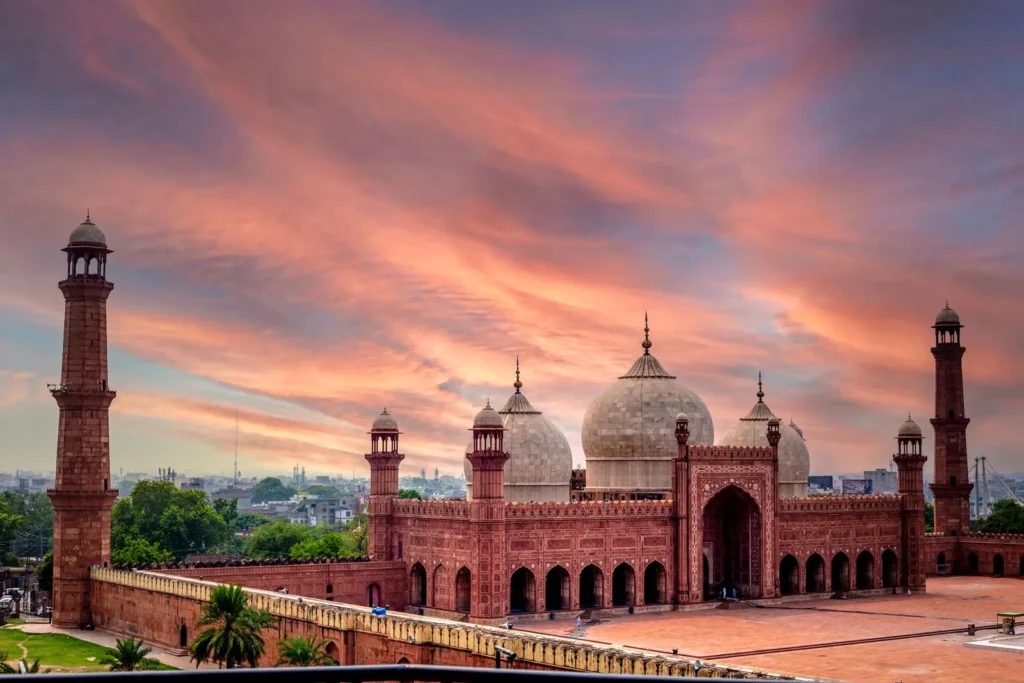
Belief in the Day of Judgment, Yawm al-Din, is one of the six articles of faith in Islam. The Qur’an describes the Hour arriving suddenly, the earth shaking, the mountains scattered like wool, and every person being raised to account for their deeds.
Islamic tradition, drawing on the hadith, divides the signs of the Hour into two groups:
- Minor signs, many of which scholars believe have already appeared. They include the spread of dishonesty and ignorance of religion, the loss of trust, and the famous description in the Hadith of Jibril of “barefoot, naked, destitute shepherds competing in constructing tall buildings”.
- Major signs, which come close to the end. A well-known hadith in Sahih Muslim lists ten, including the smoke, the Dajjal (the false messiah), the Beast of the Earth, the sun rising from the west, the descent of Isa (Jesus), and Ya’juj and Ma’juj (Gog and Magog). Many Muslims also believe in the coming of the Mahdi, a righteous leader, though Sunni and Shia traditions understand this figure differently.
The Qur’an is clear that the timing is hidden knowledge:
“They ask you about the Hour: ‘When will it arrive?’ Say: ‘Its knowledge is only with my Lord. None will reveal its time except Him.'”
Surah Al-A’raf 7:187
This is why mainstream scholars accept the signs but reject attempts to calculate a date. We look at one popular Pakistani voice on this topic in Syed Haider Jafri on the signs of Qayamat.
Christianity: the Second Coming and the Book of Revelation

Christianity teaches that Jesus Christ will return, the dead will be raised, and the world will be judged. In Matthew 24, Jesus describes signs such as “wars and rumours of wars”, famines and earthquakes, false prophets, and the gospel being preached to all nations, but he also says, “of that day and hour knoweth no man, no, not the angels of heaven, but my Father only” (Matthew 24:36, King James Version).
The Book of Revelation describes symbolic visions of judgment: seven seals, the four horsemen, the Antichrist figure often called the Beast, the final battle at Armageddon, and finally “a new heaven and a new earth” (Revelation 21:1).
Christians read these texts in very different ways:
- Futurist readers see them as literal events still to come. Some evangelical Christians believe in a “Rapture”, in which believers are taken to heaven before a period of tribulation, an idea popularised in the 19th century.
- Historicist readers, including Isaac Newton, matched the prophecies to events in history. Newton’s calculation led him to the year 2060.
- Symbolic or amillennial readers, common in Catholic, Orthodox and many Protestant churches, see Revelation as a picture of the ongoing struggle between good and evil, not a timetable.
Despite Jesus’s warning, many Christians in history have set dates, as our list of failed predictions shows.
Judaism: the end of days and the Messianic age
Jewish tradition speaks of acharit ha-yamim, “the end of days”. The prophets, especially Isaiah, Ezekiel and Daniel, describe a future in which the Messiah, a human descendant of King David, will gather the Jewish people back to their land, rebuild the Temple, and usher in an age of universal peace, when “nation shall not lift up sword against nation” (Isaiah 2:4). Many Jews also believe in the resurrection of the dead.
Rabbinic tradition is strongly opposed to calculating dates. The Talmud contains a famously sharp warning against “those who calculate the end”, because failed calculations lead people to lose hope.
Hinduism: cycles of time, not a single end
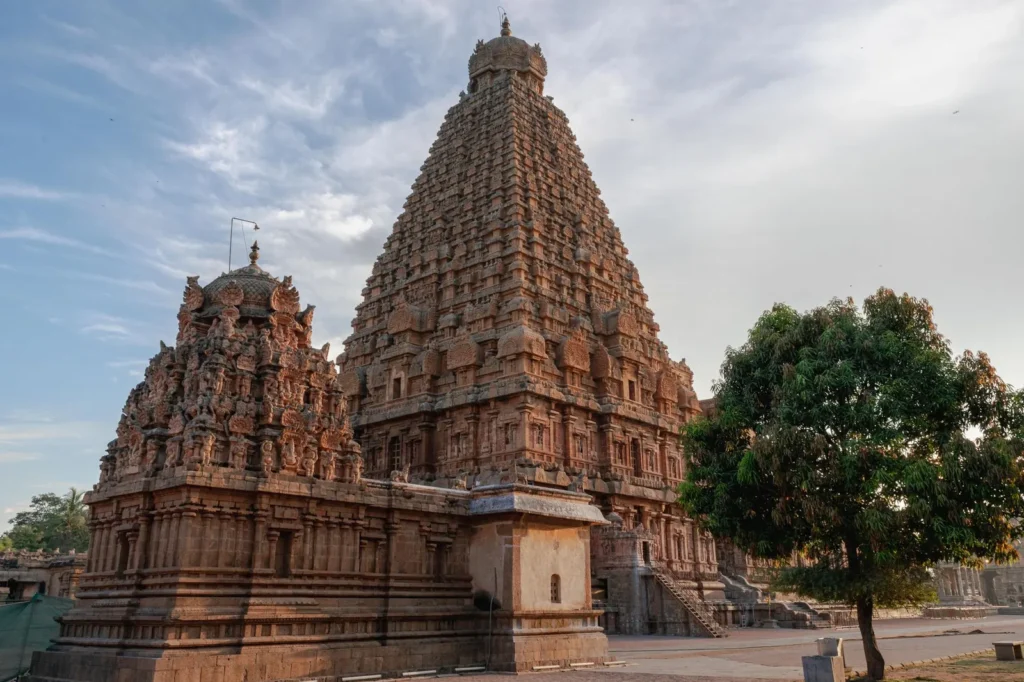
Hindu cosmology sees time as cyclical. A great cycle, or maha-yuga, contains four ages that decline in virtue: Satya, Treta, Dvapara and Kali Yuga. We are said to be living in the Kali Yuga, an age of moral decline, quarrel and confusion, which by traditional reckoning began in 3102 BCE and lasts 432,000 years.
At the end of the Kali Yuga, according to the Puranas, Kalki, the tenth avatar of Vishnu, will appear to destroy evil and restore righteousness, beginning a new Satya Yuga. On a far larger scale, the universe passes through pralaya, a dissolution, at the end of a “day of Brahma”, or kalpa, which lasts 4.32 billion years, before being created again. Interestingly, that figure is close to the age of the Earth, about 4.54 billion years, which modern science has measured.
Buddhism: impermanence and the future Buddha
Buddhism teaches that everything that arises also passes away, and that includes the world. In the Sattasuriya Sutta, the “Discourse on the Seven Suns”, the Buddha describes a distant future in which, one after another, seven suns appear, drying up rivers and oceans until the earth itself burns away. The point of the teaching is not a forecast but a lesson in impermanence.
Buddhist tradition also holds that the Buddha’s teaching will gradually decline over time, and that a future Buddha, Maitreya, will appear to teach it anew. Like Hinduism, Buddhism sees world systems arising and passing away in vast cycles.
Zoroastrianism: the final renovation
One of the world’s oldest religions, Zoroastrianism, teaches that history is a struggle between good and evil that will end with Frashokereti, a final renovation of the world. A saviour figure, the Saoshyant, will raise the dead, evil will be defeated, and the world will be made perfect. Many scholars believe these ideas influenced later Jewish, Christian and Islamic thinking about the end.
Norse myth: Ragnarök and renewal
In Norse mythology, Ragnarök begins with Fimbulwinter, three winters in a row with no summer between them. Then comes a final battle in which gods die: Odin is swallowed by the wolf Fenrir, and Thor kills the world serpent but dies from its venom. The world burns and sinks into the sea. Then it rises again, green and fertile, and two human survivors, Líf and Lífþrasir, repopulate it.
Science: probabilities and physics
Science does not describe signs or meaning. It describes mechanisms and odds. In the near term, the risks are mostly human-made: nuclear war, pandemics, climate change and artificial intelligence, which the experts behind the Doomsday Clock track every year. In the far future, the Sun will make Earth uninhabitable in about a billion years, and the universe will run down over unimaginable timescales.
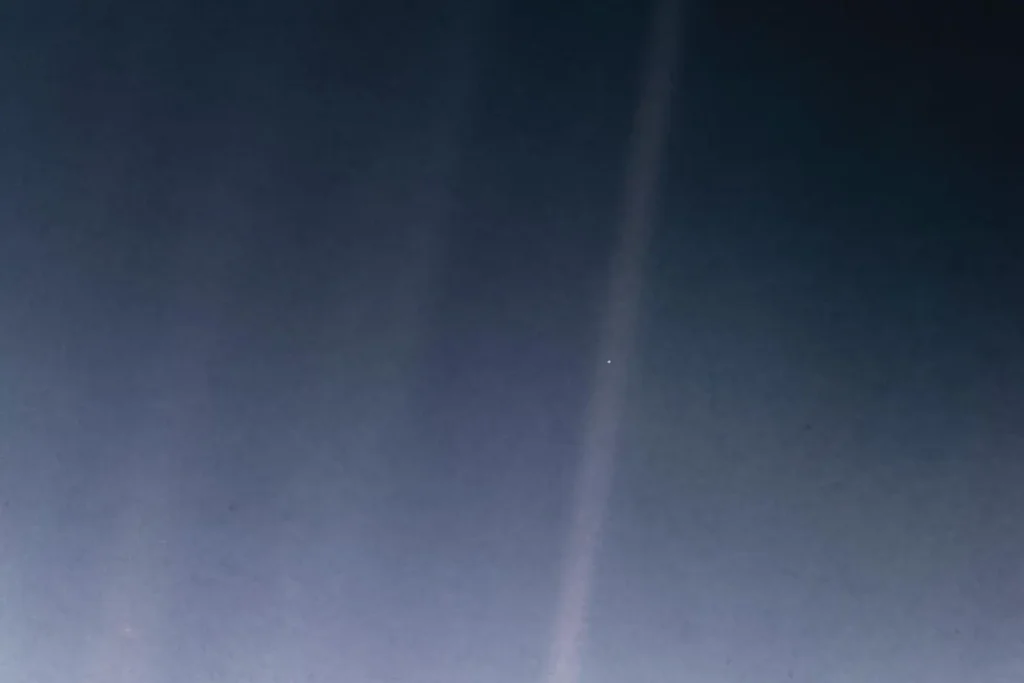
In 1990 the Voyager 1 spacecraft turned its camera back towards home from about 6 billion kilometres away and captured Earth as a tiny speck. Carl Sagan’s reflection on that “Pale Blue Dot” captures the scientific mood: our planet is small and fragile, and it is the only home we have ever known.
What religion and science share
For all their differences, the traditions above share several themes with each other, and even with science:
- How people behave matters. Almost every tradition links the end to dishonesty, injustice and the misuse of power. Science links today’s greatest risks to human choices.
- Warnings, not just predictions. Religious signs are meant to call people to change. So is the Doomsday Clock.
- Humility about timing. Islam, Christianity and Judaism all warn against fixing a date. Science gives probabilities, not dates.
- Hope beyond the end. Judgment and paradise, a new heaven and earth, a new Satya Yuga, a world rising from the sea, or simply the chance that we act wisely in time.
Frequently asked questions
What are the signs of the end of the world in Islam?
Islamic tradition describes minor signs, such as the spread of dishonesty and people competing to build tall buildings, and ten major signs, including the Dajjal, the descent of Isa, Ya’juj and Ma’juj, and the sun rising from the west. The Qur’an teaches that the timing is known only to Allah.
What does the Bible say about the end of the world?
The Bible describes the return of Christ, a final judgment and “a new heaven and a new earth”. Jesus lists signs such as wars, famines and earthquakes, but says no one knows the day or the hour.
Do religion and science contradict each other on the end of the world?
Not necessarily. Religious teachings are mostly about meaning and moral accountability, while science is about physical processes. Many believers accept both.
Which religions believe the world will end and be renewed?
Christianity (a new heaven and new earth), Islam (the hereafter), Judaism (the Messianic age), Hinduism (a new cycle of creation), Buddhism (new world systems), Zoroastrianism (the final renovation) and Norse mythology (the world rising again) all describe some form of renewal.
Are we living in the end times?
Many believers in different faiths feel that current events match the signs their traditions describe. Every tradition that addresses timing, however, warns that the exact moment cannot be known, and science sees no fixed date at all.
Sources and further reading
- The Qur’an, Surah Al-A’raf 7:187
- Sahih Muslim 2901: the ten major signs
- The Bible, Matthew 24
- Talmud, Sanhedrin 97b, on calculating the end
- Encyclopaedia Britannica: Eschatology
- NASA: Voyager 1’s Pale Blue Dot
Related articles
Or start from the beginning: all predictions about the end of the world.
Every claim above links to its original source so you can read it for yourself. Spotted a mistake or something out of date? Tell us and we will fix it.