
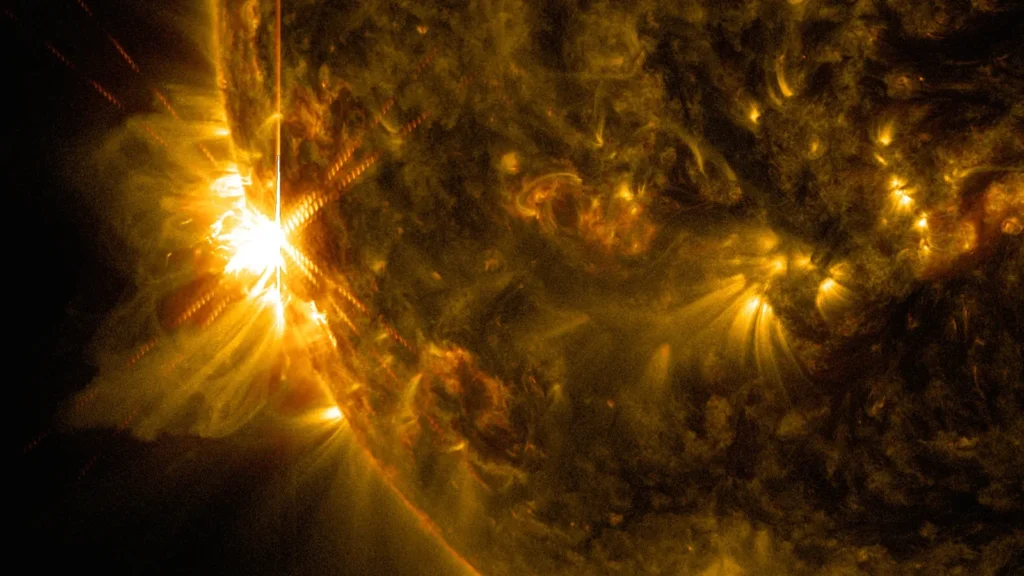
Earth will become too hot for complex life in roughly 1 billion years, because the Sun is slowly getting brighter. Plants will struggle first as carbon dioxide runs low, then the oceans will begin to escape into space. Hardy microbes may survive underground for a while longer. The Sun itself will not become a red giant for about 5 billion years.
Climate change makes headlines because it is happening on a human timescale. This is a different, much slower story: the gradual brightening of our own star. Each step below comes with a note on how confident scientists are about it.
How long until Earth is uninhabitable?
For animals and plants, about 1 billion years, with an uncertainty of several hundred million years either way. For life of any kind, perhaps 2 to 3 billion years, because single-celled organisms can survive in places where nothing larger can.
The reason is not that the Sun will suddenly change. It is that the Sun’s slow, steady brightening will eventually overwhelm the natural systems that keep Earth’s climate stable.
Why is the Sun getting brighter?
The Sun produces energy by fusing hydrogen into helium in its core. Helium is denser, so as it builds up the core contracts and gets hotter, and fusion runs faster. The result is a gradual rise in brightness of roughly 10% every billion years.
This has been going on since the Sun formed. When Earth was young, the Sun shone about 30% less brightly than today. Astronomers call this the “faint young Sun paradox”, because early Earth still had liquid water, probably thanks to a thicker blanket of greenhouse gases. Earth has been adjusting to a brightening Sun for its whole history. The problem is that this adjustment has limits.
Step 1: Plants run short of carbon dioxide (from about 600 million years)
Earth has a natural thermostat called the carbon-silicate cycle. Rain combines with carbon dioxide to form a weak acid that slowly dissolves rocks, and the carbon ends up locked in sediments on the sea floor. When the planet warms, this weathering speeds up and pulls more CO2 from the air, which cools things down again.
As the Sun brightens, the thermostat keeps working harder, drawing CO2 lower and lower. Eventually there is not enough left for photosynthesis:
- C3 plants, which include trees, wheat, rice and most other plants, need relatively high CO2. Models suggest they could start to fail in roughly 600 million years.
- C4 plants, such as maize, sugarcane and many tropical grasses, concentrate CO2 more efficiently and could hold on for a few hundred million years longer.
When plants decline, so does the oxygen they produce and the animals that eat them. Food chains collapse from the bottom up. The timing varies a lot between studies, because it depends on how fast the continents weather and how life itself adapts.
Step 2: The oceans start to disappear (about 1 to 1.5 billion years)
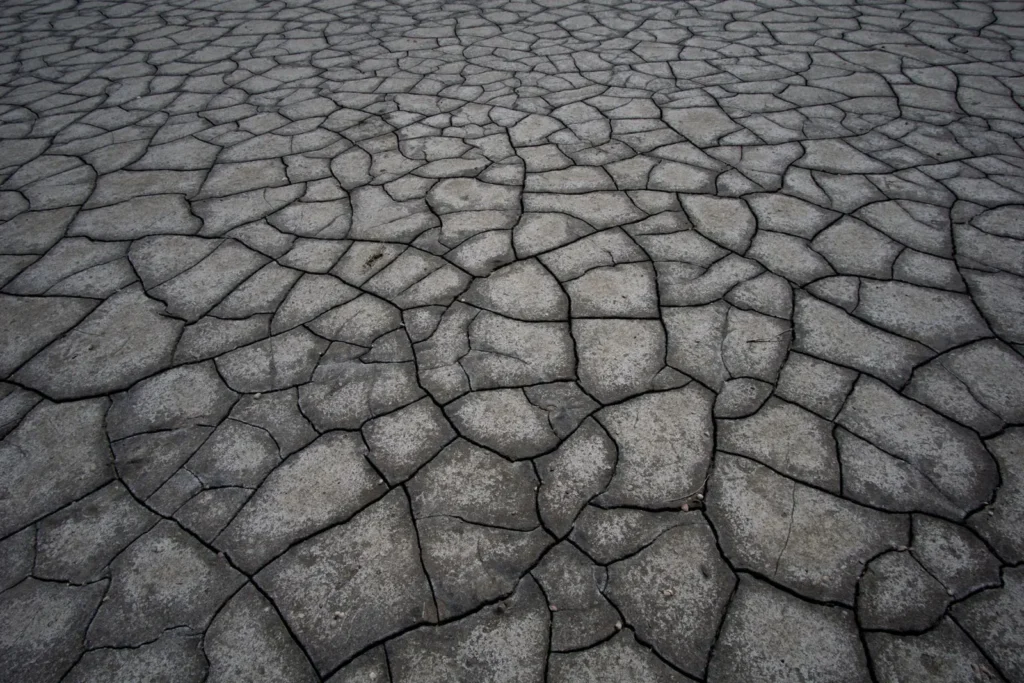
As temperatures keep rising, more water evaporates. Water vapour is itself a greenhouse gas, so warming feeds on itself. Normally almost all of that vapour stays low in the atmosphere, where it rains back out. In a much hotter climate, it rises into the upper atmosphere, where ultraviolet sunlight splits water molecules apart and the light hydrogen atoms escape into space.
Climate scientists call this the “moist greenhouse”. Each hydrogen atom that escapes is water that can never come back, so over hundreds of millions of years the oceans slowly drain away. Older models put the start of this process at about 1.1 billion years from now. A 2015 study by Eric Wolf and Brian Toon, using a more detailed 3D climate model, suggested Earth’s clouds and air circulation could keep the planet habitable for at least 1.5 billion years.
Once enough water is gone, the carbon-silicate thermostat stops working altogether, and the surface heats towards conditions like those on Venus today.
Venus: a preview of Earth’s future

Venus is almost the same size as Earth, but its surface is around 465°C, hot enough to melt lead, under a crushing atmosphere of carbon dioxide. Some scientists think Venus may once have had shallow oceans before a runaway greenhouse effect boiled them away. Whether or not that happened there, it shows the kind of world Earth will become when the Sun is bright enough.
Step 3: The last microbes (up to about 2.8 billion years)
Life is tough. Microbes already live kilometres below the surface, in boiling hot springs and in salt-saturated lakes. A 2013 study led by astrobiologist Jack O’Malley-James modelled how life would retreat as Earth heated up. Its findings suggest that the last surviving organisms would be heat-loving single-celled microbes in isolated refuges, such as deep underground or high-altitude pockets of water, and that they could survive until roughly 2.8 billion years from now.
After that, as far as we know, Earth becomes sterile.
Step 4: The red giant (about 5 billion years)
In about 5 billion years the Sun will run out of hydrogen in its core. It will swell into a red giant, reaching its largest size roughly 7.5 billion years from now, when it will be more than 200 times its current width. Mercury and Venus will be swallowed.
Whether Earth is swallowed too is still debated. The Sun will lose a large share of its mass, which loosens its grip on the planets and lets Earth’s orbit drift outward. Some models say that is enough for Earth to survive as a scorched rock. Others, such as a widely cited 2008 study by Klaus-Peter Schröder and Robert Connon Smith, find that tidal drag from the swollen Sun would still pull Earth in. Either way, Earth will have been lifeless for billions of years.
The full timeline
| Roughly when | What happens |
|---|---|
| Now | The Sun is about 4.6 billion years old and getting brighter by about 1% every 100 million years |
| ~600 million years | CO2 falls too low for most (C3) plants |
| ~1 to 1.5 billion years | Moist greenhouse begins, oceans start to escape to space, complex life ends |
| ~2 to 3 billion years | Last microbes die out in deep or high refuges |
| ~5 billion years | The Sun leaves its stable phase and starts to swell |
| ~7.5 billion years | The Sun reaches its largest size as a red giant and may engulf Earth |
Could humanity escape?
A billion years is a very long time. Modern humans have existed for about 300,000 years, and recorded history covers only about 5,000. If our descendants are still around, they will have options that sound like science fiction today:
- Moving outward: as the Sun brightens, the zone where liquid water can exist moves further out. Mars, and later moons of Jupiter and Saturn such as Europa and Titan, will become relatively warmer.
- Moving Earth itself: in 2001, astronomers Don Korycansky, Greg Laughlin and Fred Adams calculated that repeated close flybys of a large asteroid could slowly push Earth’s orbit outward, keeping it in the habitable zone for billions of years longer.
- Shading the planet: giant sunshades in space could, in principle, reduce the sunlight reaching Earth.
These ideas are speculative, but they make a serious point. For us, the more pressing question is whether humanity gets through the next few centuries. Oxford philosopher Toby Ord argues that the human-made risks of this century are far greater than any natural ones. And even a billion years is not the final end: the universe itself is heading for a slow heat death.
Frequently asked questions
How long until Earth is uninhabitable for humans?
For complex life like us, roughly 1 billion years, give or take several hundred million, unless technology lets our descendants adapt or move.
When will the Earth’s oceans boil away?
The oceans will not boil all at once. Instead, water will slowly escape to space through the “moist greenhouse” process, starting roughly 1 to 1.5 billion years from now.
When will plants die out on Earth?
Most plants may begin to fail in about 600 million years as carbon dioxide falls too low. Plants with C4 photosynthesis, such as maize, could last a few hundred million years longer.
Is climate change speeding this up?
No. Today’s climate change is caused by greenhouse gas emissions from human activity and plays out over decades and centuries. The Sun’s brightening works over hundreds of millions of years. See the full scientific timeline.
Will the Sun explode?
No. The Sun is not massive enough to become a supernova. It will become a red giant, then shed its outer layers and shrink into a white dwarf.
Sources and further reading
- NASA: Sun facts
- NASA: Venus facts
- NASA Astrobiology: Under the bright lights of an aging Sun (on Wolf and Toon, 2015)
- O’Malley-James et al. (2013), Swansong biospheres
- Schröder and Smith (2008), Distant future of the Sun and Earth revisited
- Korycansky, Laughlin and Adams (2001), Astronomical engineering
Related articles
Or start from the beginning: all predictions about the end of the world.
We summarise the research and scripture in plain English and link to the originals. If anything here is inaccurate or has changed, please get in touch.