
No, the ongoing solar maximum will not permanently destroy the global internet. The sensational phrase “Internet Apocalypse” originated from an academic networking paper warning about infrastructure vulnerabilities, but viral headlines have distorted real space physics into a fictional doomsday scenario. Modern power grids, space agencies, and telecommunications consortia have decades of experience monitoring solar weather, and a civilization-ending blackout is not on the horizon.
That said, the Sun’s current cycle—Solar Cycle 25—has proven significantly more energetic than initial scientific models predicted. As the Sun reaches and transitions out of its peak activity phase, massive coronal mass ejections (CMEs) and X-class solar flares will continue to blast billions of tons of magnetized plasma across the solar system. If a storm on the scale of the famous 1859 Carrington Event were to strike Earth directly today, it could induce destructive electrical currents in power grids, degrade GPS accuracy, and knock out critical undersea communication repeaters for weeks. Here is what space weather scientists actually know, what is vulnerable, and what is media hype.
Key takeaways
- What is the solar maximum? The Sun operates on a roughly 11-year magnetic cycle. During the solar maximum, the Sun’s magnetic poles flip, producing peak numbers of sunspots, intense ultraviolet radiation, solar flares, and coronal mass ejections.
- The origin of “Internet Apocalypse”: The term was coined in a 2021 study by computer science researcher Dr. Sangeetha Abdu Jyothi, highlighting that while optical fiber cables carry immune light signals, the copper-powered electronic repeaters spaced along undersea cables are vulnerable to geomagnetic surges.
- The Carrington precedent (1859): The strongest geomagnetic storm in recorded history melted telegraph wires and created auroras bright enough to read newspapers at midnight in the tropics. A storm of that magnitude today would cause billions in electrical grid damage.
- Early warning systems: Unlike earthquakes, solar storms do not arrive without notice. NASA and NOAA satellites stationed at Lagrange Point 1 give grid operators 15 to 48 hours of advance warning to protect critical transformers.
- Real-world resilience: The severe G5 geomagnetic storm of May 2024—the strongest in over 20 years—produced breathtaking worldwide auroras and minor GPS glitches, but zero catastrophic power grid failures, demonstrating modern grid hardening in action.
What happens during a solar maximum?
Every 11 years or so, our Sun undergoes a dramatic transformation known as the solar cycle. Deep within the Sun’s interior, powerful convective currents of ionized gas twist and tangle its magnetic field lines like stretched rubber bands. As this magnetic tension builds, dark concentrations of magnetic flux called sunspots erupt across the solar surface.
At the climax of this cycle—the solar maximum—the Sun’s magnetic field completely flips upside down; its north and south magnetic poles switch places. During this peak period, the Sun becomes hyperactive. Intense magnetic reconnections release colossal explosions called solar flares, along with billions of tons of magnetized plasma expelled into space at millions of miles per hour, known as Coronal Mass Ejections (CMEs).
The current cycle, Solar Cycle 25, began its ramp-up in December 2019. In late 2024 and 2025, NOAA’s Space Weather Prediction Center (SWPC) and NASA confirmed that the Sun had entered its solar maximum window. While the Sun’s long-term evolution will eventually boil Earth’s oceans billions of years in the future—as documented in our guide to when the world will end according to science—the 11-year solar maximum is a temporary, recurring phase of space weather that human civilization has navigated for centuries.
Where did the “Internet Apocalypse” claim come from?
The phrase “Internet Apocalypse” did not originate from a fringe doomsday cult or an anonymous conspiracy blog. It was the title of a peer-reviewed research paper presented at the ACM SIGCOMM 2021 data communication conference by computer scientist Dr. Sangeetha Abdu Jyothi, titled “Solar Superstorms: Planning for an Internet Apocalypse”.
Dr. Abdu Jyothi’s goal was not to spread panic, but to point out a blind spot in civil infrastructure engineering. While humanity has spent decades hardening regional power grids and designing redundant fiber networks against earthquakes and hurricanes, the global internet architecture has never been tested against an extreme, low-probability, high-impact space weather event.
The internet was designed with high resilience against local node outages, but it was not engineered for a globally correlated failure where hundreds of intercontinental undersea links fail simultaneously.
Just as internet rumors distorted the 1960 Doomsday Equation for 2026, social media algorithms took the technical title literally, churning out viral videos claiming that NASA had warned the internet would permanently go dark. NASA issued no such warning. While a massive solar storm poses authentic engineering challenges, it cannot “delete the internet” or destroy your personal computer.
The three weapons of a solar superstorm
When the Sun unleashes a major space weather eruption directed toward Earth, the attack does not arrive all at once. It arrives in three distinct, successive waves, each traveling at different speeds and carrying different hazards:
| Phase of Eruption | Speed & Travel Time | Primary Impacts on Earth |
|---|---|---|
| 1. Solar Flare (Electromagnetic Radiation) | Speed of light (~8 minutes) | High-frequency (HF) radio blackouts on the sunlit side of Earth; radar and maritime navigation disruption. |
| 2. Solar Proton Event (Radiation Storm) | 10–30 minutes to a few hours | Radiation hazard for astronauts in orbit; satellite memory errors; commercial airliners rerouted away from polar routes. |
| 3. Coronal Mass Ejection (CME Plasma Cloud) | 15 to 48 hours | Severe geomagnetic storms; magnetic compression of Earth’s field; induced currents in power grids and undersea cables. |
The third phase—the Coronal Mass Ejection—is the one that keeps electrical engineers awake at night. A CME is a billion-ton ball of magnetized gas. When it smashes into Earth’s magnetosphere, it squashes our magnetic field like a squeezed sponge, inducing unwanted electrical currents in long metallic conductors on the ground.
History’s greatest solar storms: 1859, 1989, and 2024
To understand the realistic risks of solar weather, we can look at historical benchmarks where solar eruptions interacted directly with human technology:
The Carrington Event (September 1859): The gold standard of space weather disasters. British astronomer Richard Carrington sketched an intense white-light flare on the Sun. Just 17 hours later, the shockwave slammed into Earth. Global telegraph lines went haywire: sparks leaped from telegraph equipment, setting papers on fire, and operators disconnected their batteries only to find the lines continued transmitting messages powered entirely by atmospheric electricity. Auroras lit up the night sky as far south as Hawaii, Jamaica, and Cuba; gold miners in the Rocky Mountains woke up and started cooking breakfast at 2:00 a.m., believing it was dawn.

The Quebec Blackout (March 1989): A powerful geomagnetic storm induced currents in the Hydro-Québec electrical grid. Within 92 seconds, protective relays tripped, causing a cascading failure that plunged six million people in Canada into freezing darkness for nine hours. In the United States, several high-voltage power transformers sustained permanent thermal damage.
The G5 Superstorm of May 2024: The strongest solar storm to strike Earth in over two decades occurred in May 2024, sparked by sunspot cluster AR3664. While it generated spectacular auroras visible across all 50 US states, Europe, and Australia, power grids around the world remained stable. The only significant disruption occurred in precision agriculture: thousands of GPS-guided tractors in the American Midwest lost navigation lock during peak planting season due to ionospheric distortion.
Why undersea cables and power grids are vulnerable
Why are modern technological systems susceptible to geomagnetic storms when smaller electronics are not? The answer lies in physics: Faraday’s Law of Magnetic Induction.
When a fluctuating magnetic field washes over the Earth, it produces an electrical field in the ground. The longer a conductor is, the higher the voltage it accumulates across its length. Small electronic devices—such as laptops, cell phones, cars, and home Wi-Fi routers—are far too short to collect significant geomagnetically induced currents (GICs). They are entirely immune.
However, two types of infrastructure stretch across hundreds or thousands of miles:
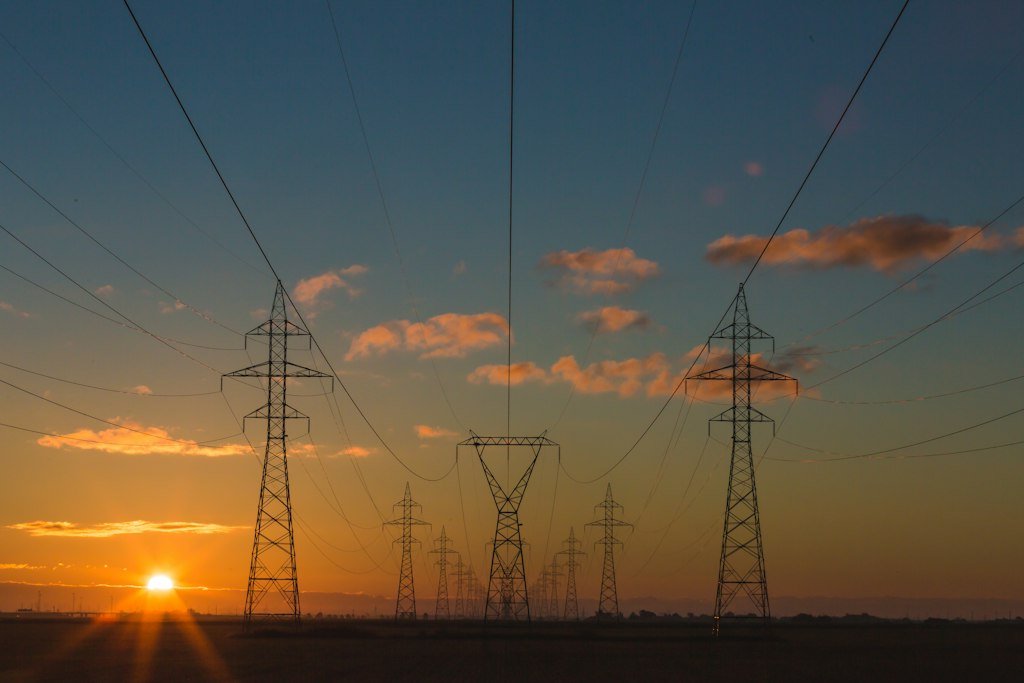
- High-voltage power transmission lines: Long transmission lines act like giant antennas for geomagnetic currents. These direct currents (DC) flow directly into massive step-up and step-down transformers, saturating their magnetic iron cores, causing overheating, vibration, and catastrophic insulation failure. Replacing a custom multi-ton transformer takes months or years.
- Submarine optical fiber cables: While the optical fibers themselves transmit beams of pure light and carry no electrical charge, light signals attenuate every 30 to 60 miles under the ocean. To boost the signal across thousands of miles of seabed, undersea cables include electronic repeaters powered by a continuous copper conductor line grounded into the ocean floor. A massive geomagnetic storm can create massive voltage differentials between the continental coastlines, overloading these repeaters and knocking out intercontinental data routes.
Unlike ballistic threats such as Asteroid 99942 Apophis in 2029—which can be tracked with pinpoint orbital mathematics decades in advance—space weather events emerge and evolve over a matter of days, making rapid monitoring essential.
How space agencies and power companies defend us
The most important difference between 1859 and today is that civilization is no longer blind. A global fleet of satellites keeps continuous watch on the Sun:
The Early Warning Sentinel: Satellites such as SOHO, SDO, and the DSCOVR spacecraft stationed at Lagrange Point 1 (one million miles sunward of Earth) observe CMEs the moment they erupt. This provides NOAA and grid operators with a 15- to 48-hour advance window to prepare before the shockwave arrives.
Grid Mitigation Protocols: When a Severe (G4) or Extreme (G5) geomagnetic warning is issued, transmission operators do not wait for transformers to burn. They activate operational procedures: redispatching electrical generation, reducing transmission line loads to create thermal margins, disconnecting vulnerable lines, and installing neutral ground capacitors that block DC geomagnetic currents.
Internet Routing Resilience: If an undersea cable linking North America to Europe were to go offline, software-defined network routing (BGP) automatically reroutes global data traffic through remaining terrestrial and alternative oceanic pathways. As analyzed in our review of the odds of human extinction this century, modern civilization possesses vast adaptive engineering redundancies that protect critical systems against natural shocks.
Frequently asked questions
Can a solar flare wipe your phone or laptop?
No. Solar flares emit electromagnetic waves, but Earth’s dense atmosphere absorbs them long before they reach the surface. Geomagnetically induced currents only collect in conductors that stretch over many miles, such as cross-country electrical grids. Your smartphone, tablet, computer, and hard drives are far too small to be affected.
How much warning do we get before a storm hits?
We receive almost immediate notice. The initial light flash of a solar flare reaches Earth in roughly 8 minutes. The dangerous Coronal Mass Ejection plasma cloud travels much slower, taking between 15 and 48 hours to cross the 93 million miles between the Sun and Earth. This gives power companies and space agencies plenty of time to take protective action.
Can solar storms physically harm humans on Earth?
No. Earth’s magnetosphere and thick atmosphere shield all life on the surface from dangerous solar radiation. Even during the most intense solar storms in history, humans on the ground experienced zero adverse biological health effects. Only astronauts in orbit outside Earth’s deep magnetic shield and high-altitude polar flight crews require radiation monitoring.
When will Solar Cycle 25 quiet down?
Solar Cycle 25 is expected to remain in an elevated activity state through late 2025 and early 2026 before entering its declining phase. The solar minimum—the quietest point of the cycle with very few sunspots—is anticipated around 2030 to 2031.
Sources and further reading
- NOAA Space Weather Prediction Center (SWPC): Real-Time Solar Cycle Monitoring
- NASA Solar Dynamics Observatory (SDO): High-Resolution Solar Flare Imagery
- Abdu Jyothi, S. (2021): Solar Superstorms: Planning for an Internet Apocalypse (ACM SIGCOMM)
- Nature: The Historic May 2024 Geomagnetic Superstorm and Global Grid Impacts
Related articles
Or start from the beginning: all predictions about the end of the world.
Written by Marcus Vance, founder and administrator of WorldToEnd. He has been analyzing global existential risks, catastrophic forecasts, and cosmic timelines for years, investigating the boundary between sensational media claims and empirical scientific reality. Spotted an error? Tell us and we will investigate.