
Every few months, sensational headlines proclaim that the giant volcanic caldera beneath Yellowstone National Park is swelling, overdue for a cataclysmic blast, and capable of wiping out modern civilization. But beneath the clickbait, what do actual seismic tomography scans, satellite radar measurements, and volcanological records tell us about the real odds of a super-eruption?
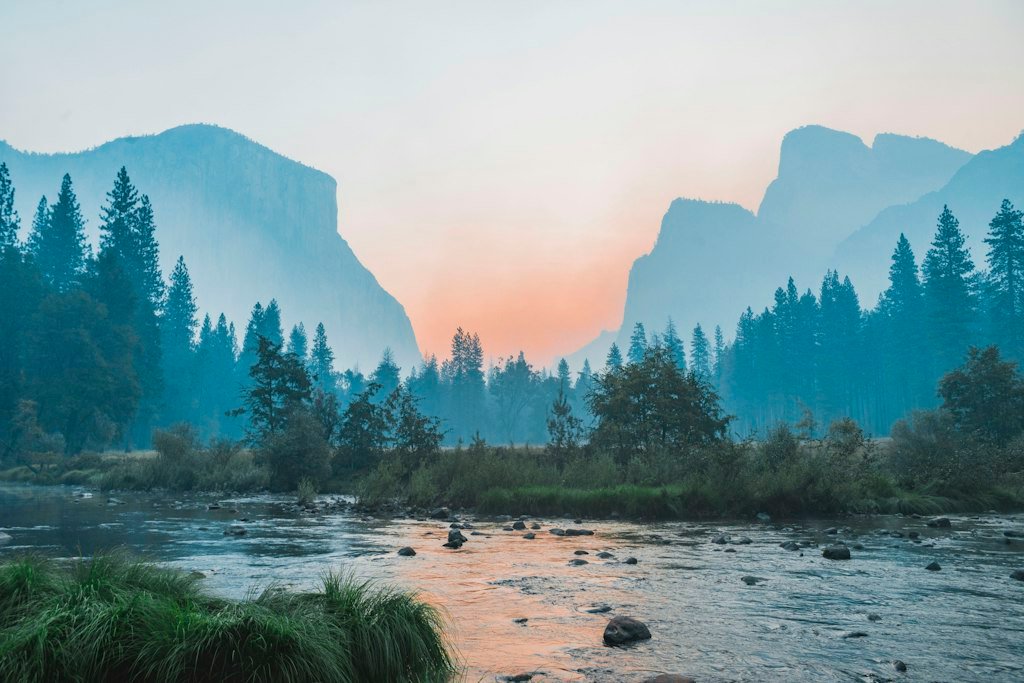
The Yellowstone Doomsday Myth vs. Volcanological Reality
The image of Yellowstone exploding into a continent-devouring blast has become a cornerstone of modern apocalyptic folklore. Documentaries and blockbuster disaster movies depict thousands of cubic kilometers of molten rock obliterating the American West within hours, plunging the entire planet into a pitch-black volcanic winter.
While Yellowstone is undeniably one of Earth’s largest volcanic systems, the popular narrative fundamentally misrepresents how volcanic plumbing works. Volcanoes do not operate like ticking time bombs with fixed countdown timers. Instead, they require specific physical states—specifically, large volumes of eruptible, liquid melt gathered under high volatile gas pressure—before any explosive event can occur.
When researchers evaluate civilizational survival alongside hazards like deep-space asteroid flybys or severe solar superstorms, Yellowstone frequently gets amplified because of its visual drama. However, modern scientific monitoring tells a vastly different story.
Key Scientific Finding
Groundbreaking 3D seismic tomography led by the United States Geological Survey (USGS) and the University of Utah reveals that Yellowstone’s shallow magma reservoir contains only about 16% to 20% liquid melt. Magma cannot erupt explosively unless the liquid fraction exceeds 45% to 50%. The reservoir is currently a solid crystal mush.
Inside the Magma Chamber: What Seismic Tomography Actually Reveals
To determine whether an eruption is physically possible, geophysicists examine seismic wave velocities. When earthquakes shake the Yellowstone plateau, seismic waves travel through solid rock faster than through molten liquid. By deploying dense arrays of seismometers across the park, scientists construct high-resolution 3D images of the underground reservoirs—similar to a medical CAT scan.
These scans show two distinct reservoirs beneath the caldera:
- Upper Crustal Reservoir: Located roughly 5 to 10 kilometers beneath the surface, holding approximately 10,000 cubic kilometers of material. Crucially, less than one-fifth of this volume is liquid rhyolite melt; the rest is a locked, crystalline sponge incapable of moving freely.
- Lower Crustal Reservoir: Located between 20 and 45 kilometers deep, containing basaltic magma. Here too, the melt fraction is estimated at only 2% to 5%, with the vast majority consisting of crystal cumulates.
For Yellowstone to erupt, millions of cubic meters of fresh hot basalt would have to intrude from the mantle, remelt vast swathes of the upper crystal mush, and elevate the liquid percentage past the 50% threshold. That thermodynamic process does not happen overnight; it requires tens of thousands of years of continuous mass transfer and would generate unmissable seismic tremors and massive surface deformation decades before an eruption.

The Three Historic Super-Eruptions and the “Overdue” Fallacy
The most pervasive claim on social media is that Yellowstone erupts like clockwork every 600,000 to 700,000 years, and since its last blast occurred 631,000 years ago, humanity is “overdue.” This mathematical logic falls apart under geological scrutiny:
- Huckleberry Ridge Tuff: 2.08 million years ago (~2,450 cubic kilometers of ejecta).
- Mesa Falls Tuff: 1.30 million years ago (~280 cubic kilometers of ejecta).
- Lava Creek Tuff: 631,000 years ago (~1,000 cubic kilometers of ejecta).
Calculating an “average” from only two intervals (780,000 years and 669,000 years) has zero predictive statistical validity. More importantly, geological hot spots do not produce super-eruptions indefinitely. Hot spots migrate as continental plates drift over mantle plumes. In fact, the Yellowstone hot spot has been active for over 16 million years, tracing a path across Idaho’s Snake River Plain. The current system may well have entered its declining, dying phase.
Even when Yellowstone does erupt, the overwhelming majority of its activity consists of non-explosive rhyolite and basalt lava flows. Since the massive Lava Creek eruption, Yellowstone has experienced around 80 individual, quiet lava flows—the most recent occurring 70,000 years ago at Pitchstone Plateau.
The Worst-Case Scenario: Ashfall and Volcanic Winter
If Yellowstone were to experience a maximum Volcanic Explosivity Index (VEI 8) super-eruption, what would actually happen? Scientists at the USGS and atmospheric modeling teams have simulated this exact scenario:
Within 500 kilometers of the park (encompassing Wyoming, Montana, and Idaho), pyroclastic density currents and crushing ash blankets (exceeding 30 centimeters) would devastate buildings, disrupt municipal water supplies, and ground all regional air travel. Further east, fine silicate ash would blanket the American agricultural breadbasket (the Midwest) under several centimeters of powder, choking machinery and crippling transport networks.
Globally, the primary threat is atmospheric: the injection of tens of millions of metric tons of sulfur dioxide (SO2) into the stratosphere. Converting into sulfate aerosols, these particles reflect incoming solar radiation, causing a worldwide temperature drop of 3°C to 7°C for several growing seasons. While this would spark severe global agricultural stress and economic disruption, peer-reviewed climate models demonstrate it would not cause the total extinction of the human species. Humans survived the massive Toba super-eruption 74,000 years ago with stone-age technology; modern civilization possesses unprecedented engineering buffers.

How the USGS Monitors Real-Time Uplift, Earthquakes, and Gases
Yellowstone is the most heavily instrumented volcano on planet Earth. The Yellowstone Volcano Observatory (YVO)—a consortium comprising the USGS, the University of Utah, and the National Park Service—operates a massive multi-parameter sensor network:
- Continuous GPS & InSAR: Satellite radar tracks surface breathing. The caldera floor regularly rises and falls by several centimeters over multi-year cycles as hydrothermal fluids migrate through porous rock.
- Seismic Networks: Detects thousands of micro-earthquakes annually. Crucially, these are tectonic crustal adjustments and hydrothermal fluid shifts, not magma ascending toward the surface.
- Gas Geochemistry: Spectrometers sample emissions of CO2, SO2, and H2S. A magmatic recharge event would cause SO2 emissions to skyrocket by orders of magnitude.
If a super-eruption were brewing, warning signs would be impossible to hide: intense swarms of deep and shallow earthquakes migrating upward, ground uplift measured in meters rather than millimeters, and thermal venting altering landscape temperatures across whole valleys. Scientists would have years—if not decades—of advance notice.
Yellowstone in Existential Risk Context
In the broader framework of existential risks—such as those explored in our assessments of the mathematical odds of human extinction and when science predicts the world will end—supervolcanoes represent an extraordinarily low annual probability event.
The annual probability of a VEI 8 super-eruption at Yellowstone is estimated by geologists at roughly 1 in 730,000 (0.00014% per year). By comparison, civilizational risks stemming from unaligned synthetic technologies or geopolitical escalations present orders of magnitude higher vulnerability over the coming century. Yellowstone remains a breathtaking natural park and active geologic laboratory, not an impending global executioner.
Frequently Asked Questions
Is Yellowstone overdue for an eruption?
No. Volcanoes do not operate on a schedule. Geological data indicates Yellowstone has had only three explosive super-eruptions separated by 780,000 and 669,000 years. An average of two intervals carries no statistical predictive power.
Would a Yellowstone eruption cause human extinction?
No. While a super-eruption would be an economic catastrophe for North America and cause global agricultural shortages via temporary volcanic cooling, it would not sterilize the planet or end humanity.
Could humans drill into Yellowstone to relieve pressure?
NASA researchers once explored a hypothetical theoretical concept to circulate water and cool the magma chamber, but practical execution risks triggering catastrophic cracking and depressurization, making real-world drilling unfeasible.